

How is AI Used in Ultrasound?
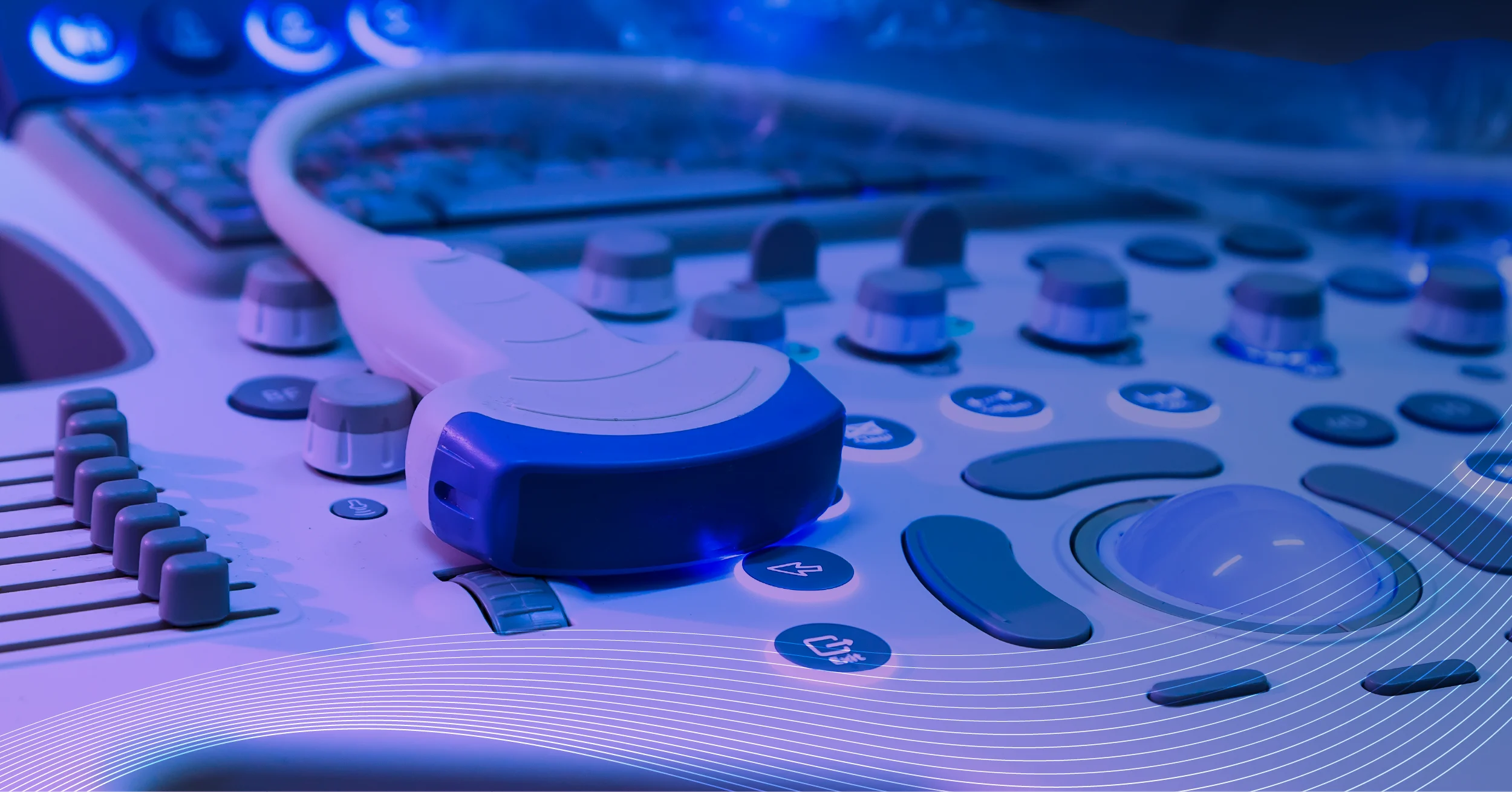
AI in Ultrasound: Revolutionizing Diagnostic Imaging
What is Ultrasound?
Since the mid-20th century, ultrasound has been a cornerstone of radiology. Valued for its real-time visualization, safety, and non-invasive nature, it uses high-frequency sound waves to create images of internal organs, tissues, and blood flow. Its capabilities span from obstetrics and gynecology – monitoring fetal development and maternal health – to cardiology, musculoskeletal assessments, and cancer screening, particularly for the thyroid and breast.
Unlike CT scans and X-rays, ultrasounds do not use radiation. Moreover, ultrasound is known for its dependability and convenience. Varying in size and portability, it allows for easy, handheld usage in many applications. The non-invasive, efficient nature of this technology, which provides real-time imaging, has led to its popularity and its reputation for reliability.
How is AI Used in Ultrasound?
Artificial Intelligence (AI) has rapidly advanced in the last decade, and is quickly being integrated into varying aspects of everyday life. In particular, AI has transformed fields that rely on pattern recognition – including medical imaging. In ultrasound, AI promises to simplify imaging and interpretation, eliminate human error, and expand patient access to expert-level diagnostics.
AI provides many benefits to the ultrasound process. It can help users better position the probe for optimal images and more precisely identify and characterize lesions or abnormalities. AI also provides automated reporting, producing standardized, structured reports for clinicians.
The integration of AI into ultrasound can make high-quality diagnostics more consistent and accessible.
What are the Benefits of AI in Ultrasound for Patients?
For patients, integrating AI into ultrasound brings tremendous benefits. AI-powered ultrasound systems can automatically detect and characterize abnormalities, such as thyroid nodules or breast lesions, with high accuracy.
AI in ultrasound also produces strong and consistent results. AI technology is excellent at identifying the most subtle abnormalities that even the most trained professional can miss. This reduces the risk of missed diagnoses and allows patients to get the help they need before any abnormality can become a threat to their health.
By speeding up the process of creating and viewing images, AI lets doctors and clinicians make important decisions faster. For example, See-Mode Technologies’ AI solutions, now part of RadNet, have demonstrated improved diagnostic accuracy and workflow efficiency, reducing scan times by up to 30%.
Earlier and more accurate detection of thyroid or breast lesions can lead to earlier interventions and improved survival rates.
Ultrasound AI Comes to RadNet Centers
In June 2025, RadNet acquired See-Mode Technologies, an innovator in AI-powered ultrasonic diagnostics. See-Mode specializes in AI solutions for thyroid and breast ultrasound, two of the most common applications in women’s health.
See-Mode’s software automatically detects and characterizes thyroid nodules and breast lesions, enhancing diagnostic accuracy. Additionally, their thyroid ultrasound solution is FDA-approved and has already been deployed in some RadNet imaging centers, demonstrating tangible benefits in scan time and workflow.
RadNet’s AI strategy is spearheaded by DeepHealth, our wholly owned AI division. DeepHealth is focused on integrating advanced AI tools across RadNet’s network to improve health outcomes.
RadNet has previously deployed other AI tools for breast screening, such as our Enhanced Breast Cancer Detection (EBCD) program, which is used in screening mammography. EBCD uses AI to help our specialty trained breast radiologists detect even subtle lesions by pointing out areas of suspicion that are not always visible to the human eye. Since rolling out the EBCD program, we have seen a 21% increase in breast cancer detection (Statistics based on an analysis performed on data gathered over a 2-year period of clinical use).
RadNet is committed to demonstrating how AI can be harnessed to benefit both patients and providers. The addition of AI in ultrasound not only allows more patients to be seen with decreased wait times, but the enhanced accuracy promises to improve early detection rates for thyroid and breast cancers – conditions where early intervention is critical. AI in ultrasound is poised to expand access and save lives in a manner never before imaginable.
For more information on RadNet’s AI Ultrasound program, EBCD or any of our programs, and locations where you can access these advanced imaging tools for your diagnostic needs, please visit our website and find a center near you.