

Say YES to Enhanced Breast Cancer Detection™ (EBCD) When Scheduling Your Screening Mammogram in Southwest Florida

You Deserve More from Your Mammogram You Deserve More from Your Mammogram

More Accuracy. More Confidence. More Power with Artificial Intelligence Behind Your Mammogram.
Schedule your Screening Mammogram online via our patient portal or call 239-936-4068.
Put the Power of Artificial Intelligence Behind Your Mammogram
At Radiology Regional, we're transforming breast cancer detection in Southwest Florida with Enhanced Breast Cancer Detection® (EBCD®). EBCD is the only solution of its kind — a package of breast care tools that work together to optimize your annual breast cancer screening exam. If you want greater confidence in your mammogram results, schedule your screening mammogram appointment today at Radiology Regional!
Why EBCD Is an Important Part of Breast Cancer Screening
- One in eight women will develop breast cancer in her lifetime. Early detection is crucial, when treatment options are most effective.
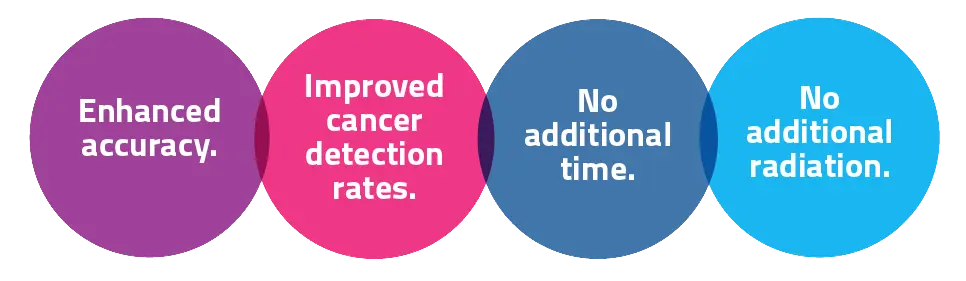
- EBCD uses artificial intelligence technology powered by DeepHealth to improve the overall cancer detection rate, as shown in a recent clinical study.
- No additional radiation or time is required during your visit — the same screening experience, with state-of-the-art results.
What Is Breast Density?
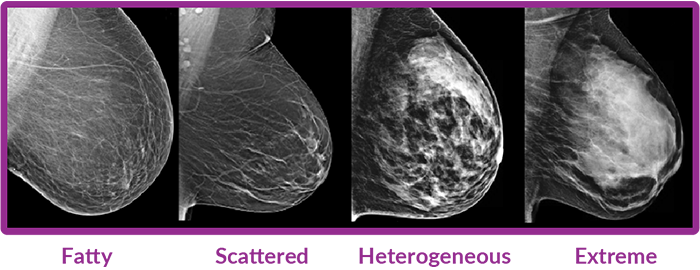
Breast density is the amount of glandular and connective tissue compared to fatty tissue in your breasts. Dense breast tissue can make it harder for mammograms to detect tumors.
40%
of women have dense breasts1.
Why Should You Know Your Breast Density?
- Cancers can be more challenging to detect in dense breast tissue, since both tissue and tumors appear white on mammograms1.
- Your doctor will be able to review your breast density with you at the time of your annual mammogram.
You'll receive a lay letter with FDA-required language about your tissue density type, so you can make the best decision for your own health.
How Is Your Breast Cancer Risk Determined?
A comprehensive survey estimates a woman's probability of developing breast cancer within her lifetime. Offered to every screening patient.
What Is Abbreviated Breast MRI for High-Risk Patients?
Abbreviated Breast MRI (ABMR) can detect hidden cancers that may not be visible on a mammogram, and our abbreviated approach is quicker and more affordable than a traditional breast MRI. It's available for women with above-average lifetime risk for breast cancer or dense breasts who may need additional imaging tools for overall breast health. Ask your doctor if an abbreviated breast MRI at Radiology Regional is right for you!
Why Annual Screening Mammograms Matter
85%
of breast cancers occur in women who have no family history of breast cancer2.
- Early Detection of Breast Cancer: Mammograms can detect breast cancer at its earliest stages, often before symptoms appear. Early detection significantly increases the chances of successful treatment and survival.
- Improved Treatment Options: When breast cancer is detected early, treatment options are generally less aggressive and more effective, leading to better outcomes and quality of life.
- Monitoring Changes: Annual screening mammograms create a baseline of breast tissue that helps radiologists detect subtle changes over time and identify abnormalities that might indicate cancer.
- Risk Assessment: For women with a family history of breast cancer or other risk factors, annual mammograms help assess individual risk and guide decisions about additional screening or preventive measures.
- Empowerment Through Awareness: Knowing your breast health status through regular screening empowers you to take proactive steps for your health, including lifestyle changes and early intervention when necessary.
Sources:
- 1Dense breast tissue: Breast density and mammogram reports. American Cancer Society. Accessed August 26, 2024. cancer.org
- 2United Cancer Support Foundation. Breast cancer statistics in the United States. Accessed August 26, 2024. unitedcsf.org
- Breast density source: DenseBreast-info, Inc. densebreast-info.org