
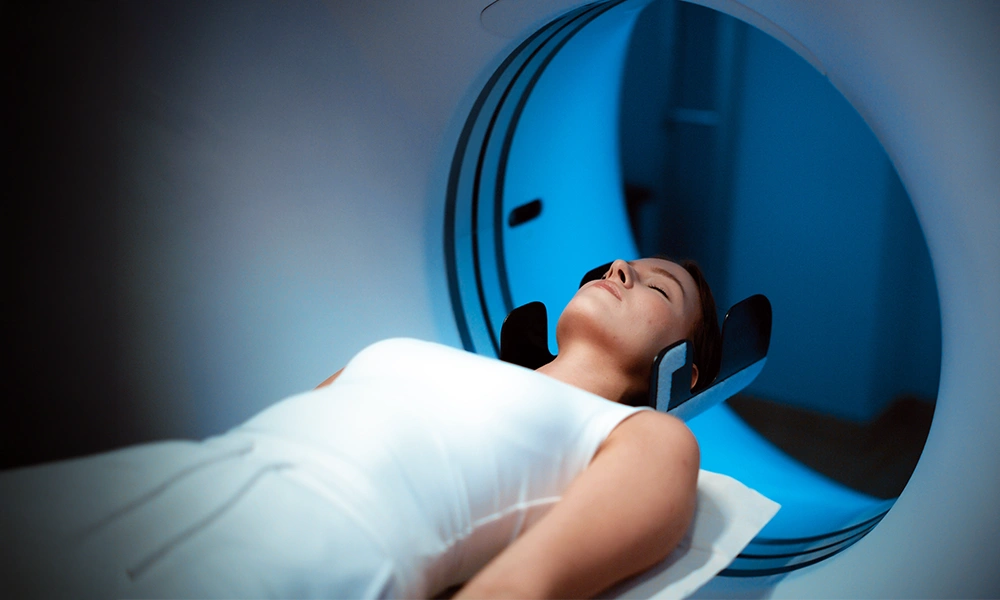
What is a CT scan?
A CT (Computed Tomography) scan is an advanced type of X-ray exam.
Multiple X-rays are taken rapidly from a number of different angles around the body and then arranged by a high-speed computer to produce a cross-sectional view. CT may be used to visualize internal organs, head, neck, spine or extremities.
A CT scan helps differentiate between healthy and diseased tissue, making it possible to accurately diagnose many diseases in their early stages.
Contrast, when it is needed
For some CT scans, the radiologist injects intravenous contrast medium or dye to highlight certain tissues for closer examination. Certain patients may also be required to drink oral contrast as well.
A short, wide opening
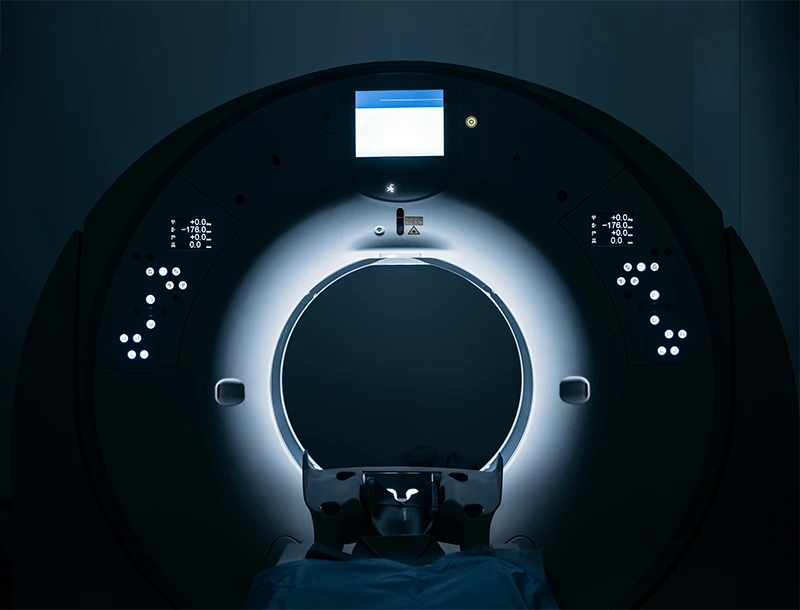
Unlike a conventional MRI, a CT scanner has a short, wide opening, so you are not enclosed in a long tunnel.
When is a CT used?
CT scanning is generally used when your doctor needs more detailed diagnostic information than is possible from regular X-ray studies.
CT is especially useful for imaging the lungs and for showing calcium deposits (calcifications), and it can quickly show bleeding in an emergency. MRI may show some soft-tissue problems better than CT.
-
01
Sinus CT, without contrast
Precise visualization of nasal passages and sinuses.
-
02
High-Resolution Chest CT
Specialized imaging for lung parenchyma and interstitial disease.
-
03
Abdomen Multiphase CT
Advanced protocols for targeted liver, pancreas and kidney evaluation.
-
04
Cardiac CT
Assessing the risk of heart disease, the presence and extent of plaque build-up in the arteries and, with added FFR-CT analysis, whether a narrowing is limiting blood flow, without an invasive catheter procedure.
-
05
Low-Dose Lung CT
A screening exam that keeps radiation exposure low, used to find lung cancer before it is symptomatic and before it has spread.
Inside the exam
You are positioned
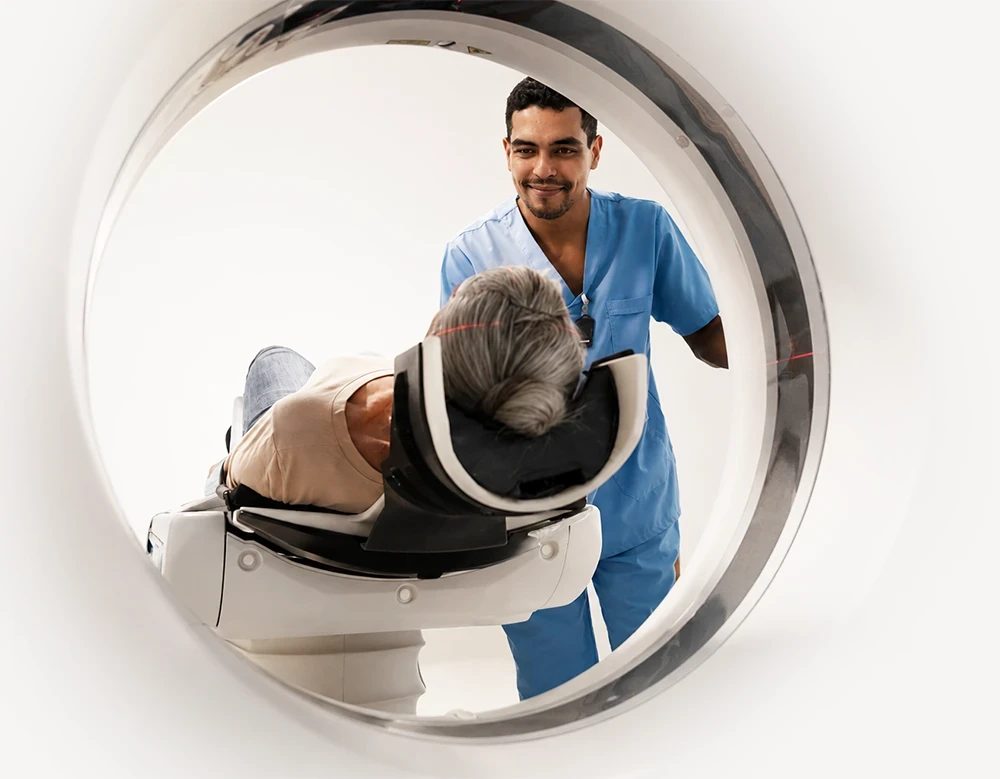
You will be positioned onto the table for the scan. You will feel the table move after each scan and may hear a whirring noise or high-pitched beep.
Hold still. Hold your breath.
To get the most precise results, the technologist may ask you to hold your breath for a short time. Lie as still as possible to avoid blurring the images. You will be able to communicate with the technologist at all times during your scan.
It is over quickly
Actual time to acquire the images is often less than two minutes, but you should expect to be in the imaging room for approximately 10 to 15 minutes in its entirety.
Most patients leave right after
If contrast was used, drink plenty of fluids, especially water, for the next 24 hours to help flush the contrast medium from your body, unless your doctor told you to limit fluids. The radiologist will review your scans and send the results to your physician.
Our CT technology
CT scans provide a high-speed, detailed look inside the body, paired with AI tools that assist in cardiac plaque evaluation. Our technology captures cross-sectional clarity to support proactive detection and timely treatment planning.
Is a CT scan safe?
At RadNet, our advanced CT scanners utilize low-dose protocols adhering to the ALARA principle (As Low As Reasonably Achievable) to minimize radiation exposure while maintaining exceptional image clarity. If you are pregnant, you should not have a CT scan without first discussing the risks with your doctor.
If you have had a reaction to contrast
There is a small risk you will have an allergic reaction to contrast dye. Common minor allergic reactions may include hives and itching. More serious contrast reactions are very rare. Be sure to tell your health care provider if you know you are allergic to CT contrast dye or to any medications.
Our staff and contracted physicians are trained and prepared to handle immediately any allergic reaction you might have.
CT screening exams
Most CT scans are ordered to answer a question you already have. These two look for something before it has a chance to speak up.
Low-Dose Lung CT
A high-quality screening exam that keeps radiation exposure low, used to find lung cancer before it is symptomatic and before it has spread.
- CT protocols tailored for lung screening, with radiation exposure kept low
- Finds lung cancer before it is symptomatic, and before it has spread
- Eligibility is based on age and personal smoking history

Cardiac CT
A suite of non-invasive CT procedures that assess the risk of heart disease and the extent of plaque build-up in the arteries.
- Coronary calcium scoring
- Coronary CTA with AI plaque analysis
- Non-invasive, with no catheter and no hospital stay

Exam preparation
We want your exam to be as comfortable and hassle-free as possible, so we provide all the information you will need to prepare before you arrive.
Your specific exam has its own instructions. You will find them on the Exam Preparation page.
All exam preparationWhat to bring
-
Prescription or referral from your physician.
-
A list of the medications you take, including non-prescription medications and supplements.
-
Insurance cards.
-
Any previous, relevant imaging exams and reports performed outside of our network, and your medical history.
Common questions
Actual time to acquire the images is often less than two minutes, but you should expect to be in the imaging room for approximately 10 to 15 minutes in its entirety.
At RadNet, our advanced CT scanners utilize low-dose protocols adhering to the ALARA principle (As Low As Reasonably Achievable) to minimize radiation exposure while maintaining exceptional image clarity. If you are pregnant, you should not have a CT scan without first discussing the risks with your doctor.
For some CT scans, the radiologist injects intravenous contrast medium or dye to highlight certain tissues for closer examination. Certain patients may also be required to drink oral contrast as well. If contrast was used, drink plenty of fluids, especially water, for the next 24 hours to help flush the contrast medium from your body, unless your doctor told you to limit fluids.
There is a small risk you will have an allergic reaction to contrast dye. Common minor allergic reactions may include hives and itching. More serious contrast reactions are very rare. Be sure to tell your health care provider if you know you are allergic to CT contrast dye or to any medications. Our staff and contracted physicians are trained and prepared to handle immediately any allergic reaction you might have.
Unlike a conventional MRI, a CT scanner has a short, wide opening, so you are not enclosed in a long tunnel.
Most patients can leave right after the exam. Your care team will tell you if you need to stay for observation or need someone to drive you home. If contrast was used, drink plenty of fluids, especially water, for the next 24 hours, unless your doctor told you to limit fluids. A CT myelogram is the exception: arrange for someone to drive you to and from your appointment, and rest for at least 24 hours afterwards.
A CT scan is an advanced type of X-ray exam. CT scanning is generally used when your doctor needs more detailed diagnostic information than is possible from regular X-ray studies.

Find a CT location near you
Not every center offers every exam. Confirm the exam you need when you book.