
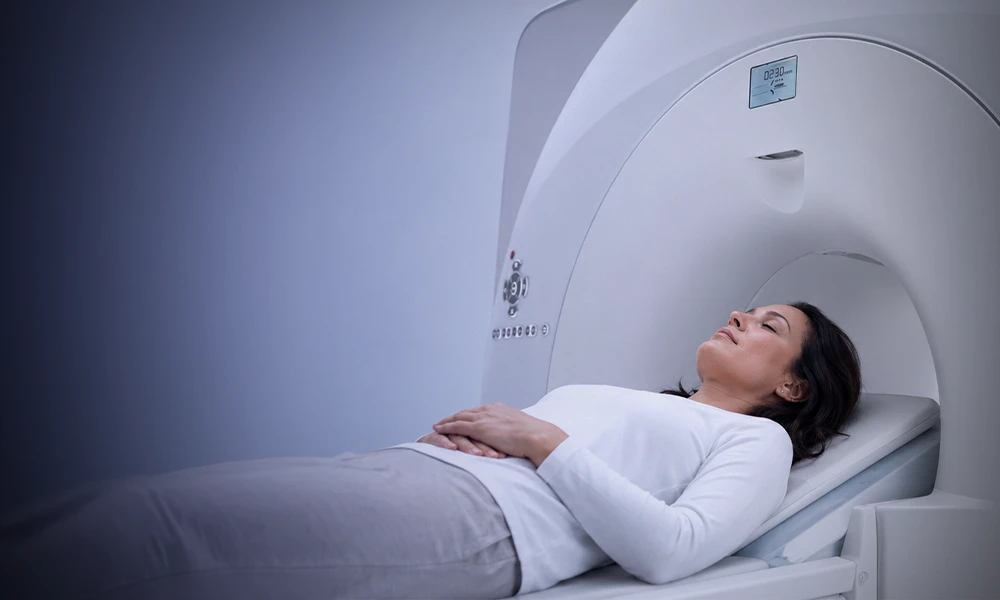
What is PET/MRI?
A PET/MRI scan is a two-in-one test that combines images from a positron emission tomography scan and a magnetic resonance imaging (MRI) scan.
This hybrid approach produces highly detailed internal body pictures. Medical professionals use these images to identify conditions and develop treatment strategies.
It combines PET’s metabolic imaging with MRI’s high-resolution anatomical detail in a single exam — molecular, functional and anatomic information together.
When is PET/MRI used?
PET/MRI is a recent addition to imaging in an outpatient setting. It is particularly useful in diagnosing oncologic and neurological conditions.
Your physician decides which exam answers the question they have. Ask them why this one was ordered for you.
-
01
Neuro-oncology and brain tumors
Differentiating recurrent high-grade glioma from post-treatment radiation necrosis.
-
02
Alzheimer’s and anti-amyloid monitoring
Simultaneous baseline safety MRI and amyloid biomarker confirmation for therapies like Leqembi and Kisunla.
-
03
Pelvic and prostate oncology
Multiparametric soft-tissue anatomy paired with metabolic staging in a single session.
-
04
Refractory epilepsy
Localizing epileptogenic seizure foci when standard MRI is normal or inconclusive.
-
05
Soft tissue and pediatric oncology
Comprehensive whole-body staging with zero ionizing radiation from the anatomical component.
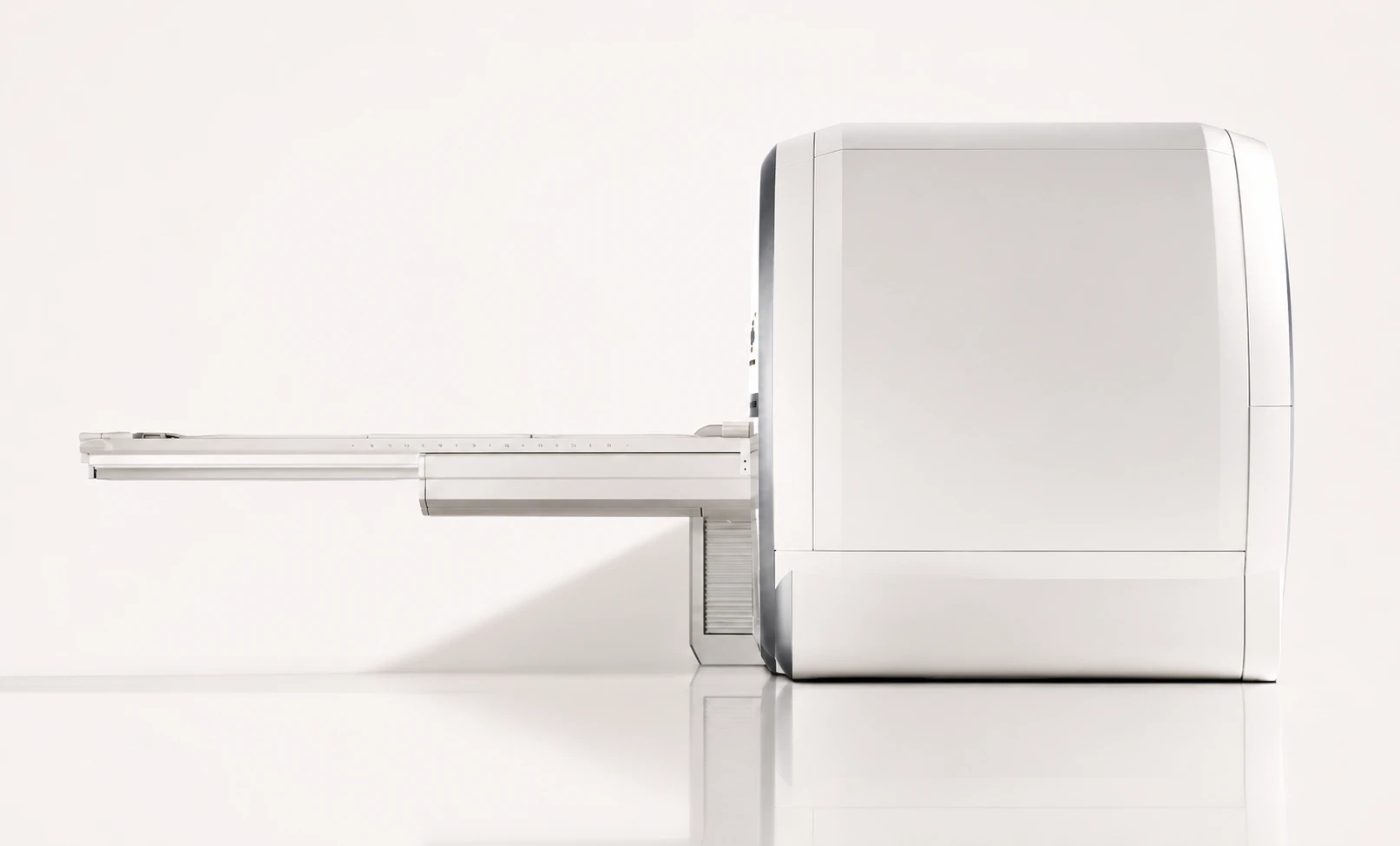
Inside the exam
The entire procedure usually lasts between two and three hours.
01
The MRI half
MRI scans employ strong magnetic fields to generate detailed images of internal structures, while also providing functional information.
02
The PET half
PET scans use tracers that highlight indicators of disease — how cells are behaving rather than only where they are.
03
The two together
Combined, these create a 3D image of the body, with the metabolic picture laid over the anatomical one.
One appointment instead of two
PET/MRI can provide a more accurate diagnosis and therefore better treatment options. Combining both modalities enables completing scans during one appointment rather than scheduling multiple visits.
Reduced radiation dose
Especially beneficial for patients requiring repeat imaging.
A more comprehensive read
A comprehensive assessment of neurological diseases, including Alzheimer’s, epilepsy and brain tumors.
Fewer separate exams
For Alzheimer’s patients qualifying for Leqembi, PET/MRI can replace separate MRI and PET/CT exams.
The risks involved with the procedure are minimal. Your care team will go through your own history with you before the exam, including anything that affects whether you can have an MRI.
Common questions
A PET/MRI scan is a two-in-one test that combines images from a positron emission tomography scan and a magnetic resonance imaging (MRI) scan. This hybrid approach produces highly detailed internal body pictures, which medical professionals use to identify conditions and develop treatment strategies.
The entire procedure usually lasts between two and three hours.
PET/MRI is a recent addition to imaging in an outpatient setting, and it is particularly useful in diagnosing oncologic and neurological conditions. It is also used to look at the effect of certain medications on the heart and brain, abnormal tissue or tumors, early recognition of dementia, shifts in blood distribution, and areas affected by a stroke or blood clot.
Combining both modalities means the scans are completed during one appointment rather than across multiple visits, and PET/MRI can provide a more accurate diagnosis and therefore better treatment options. It also means a reduced radiation dose, which is especially beneficial for patients requiring repeat imaging.
For Alzheimer’s patients qualifying for Leqembi, PET/MRI can replace separate MRI and PET/CT exams. For patients receiving anti-amyloid therapy it can simultaneously provide the required brain MRI for baseline safety as well as the required biomarker for beta-amyloid pathology.
The risks involved with the procedure are minimal. Your care team will go through your own history with you before the exam, including anything that affects whether you can have an MRI.

Find a PET/MRI location near you
PET/MRI is offered at a small number of centers. Confirm the exam you need when you book.